Russian Toy vs. Chihuahua: How to Tell Them Apart (Even Your Vet Might Not)
It happens to us all the time: we walk into a veterinary clinic with one of our dogs, and the receptionist confidently types "Chihuahua" into the system. The breeds are similar in size, they share some colors, and the Russian Toy is still so rare in America that many professionals have simply never seen one. Yet these are two completely different breeds — from different continents, with different histories and noticeably different personalities.
Different Continents, Different Stories
The Chihuahua traces its roots to Mexico and the ancient companion dogs of Mesoamerica; it has been an AKC breed since 1904 and is one of the most recognizable dogs in the world. The Russian Toy descends from English toy terriers kept by the Russian aristocracy and was recreated by Soviet breeders in the 1950s. It reached full FCI recognition only in 2017 and entered the AKC Miscellaneous Class in 2022 — more than a century after its Mexican colleague.
How to Tell Them Apart at a Glance
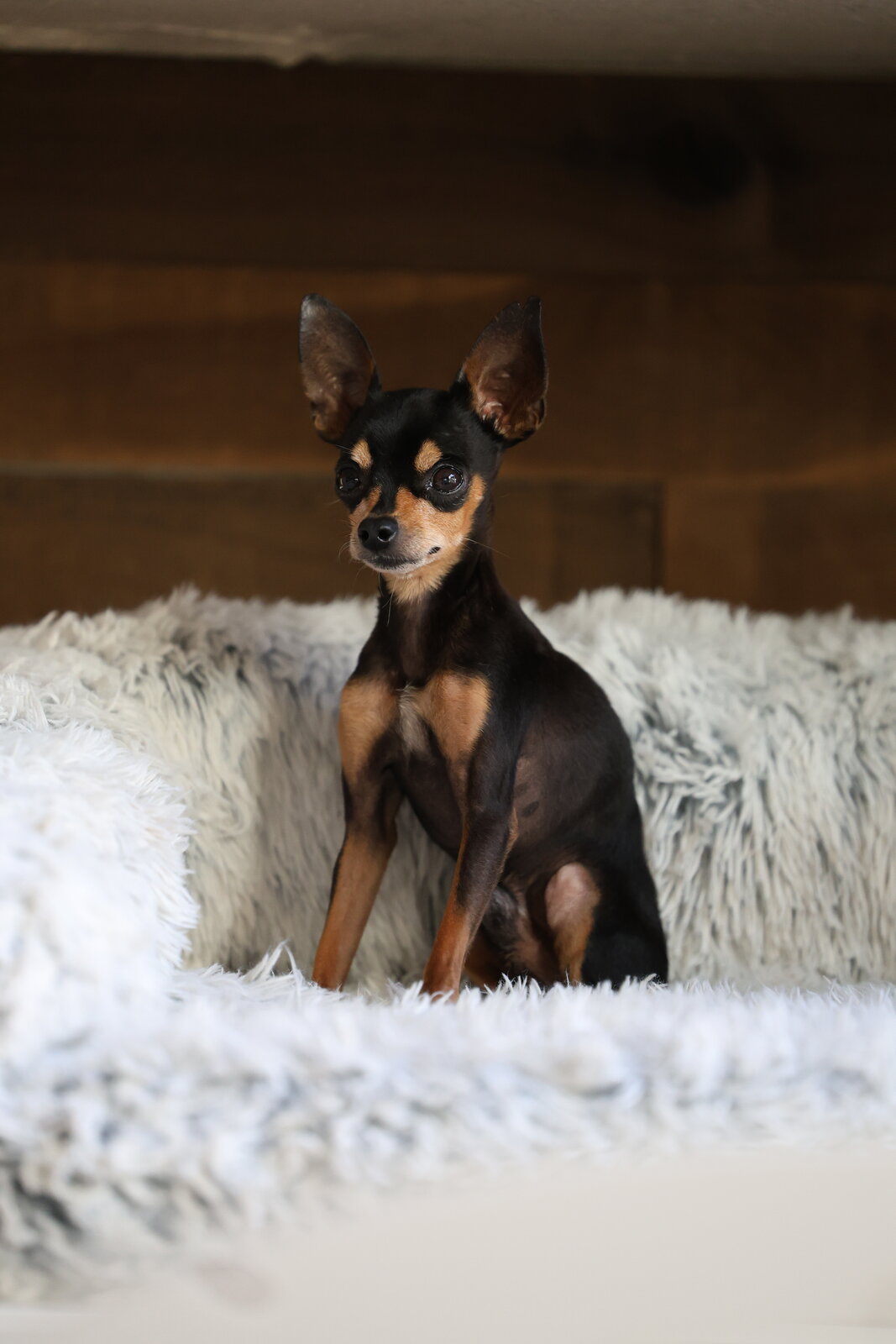
The silhouette. The Russian Toy is a dog of elegant, almost deer-like lines: long slender legs, a square body, a light frame. The Chihuahua is more compact and rounded, often lower on the leg with a sturdier body.
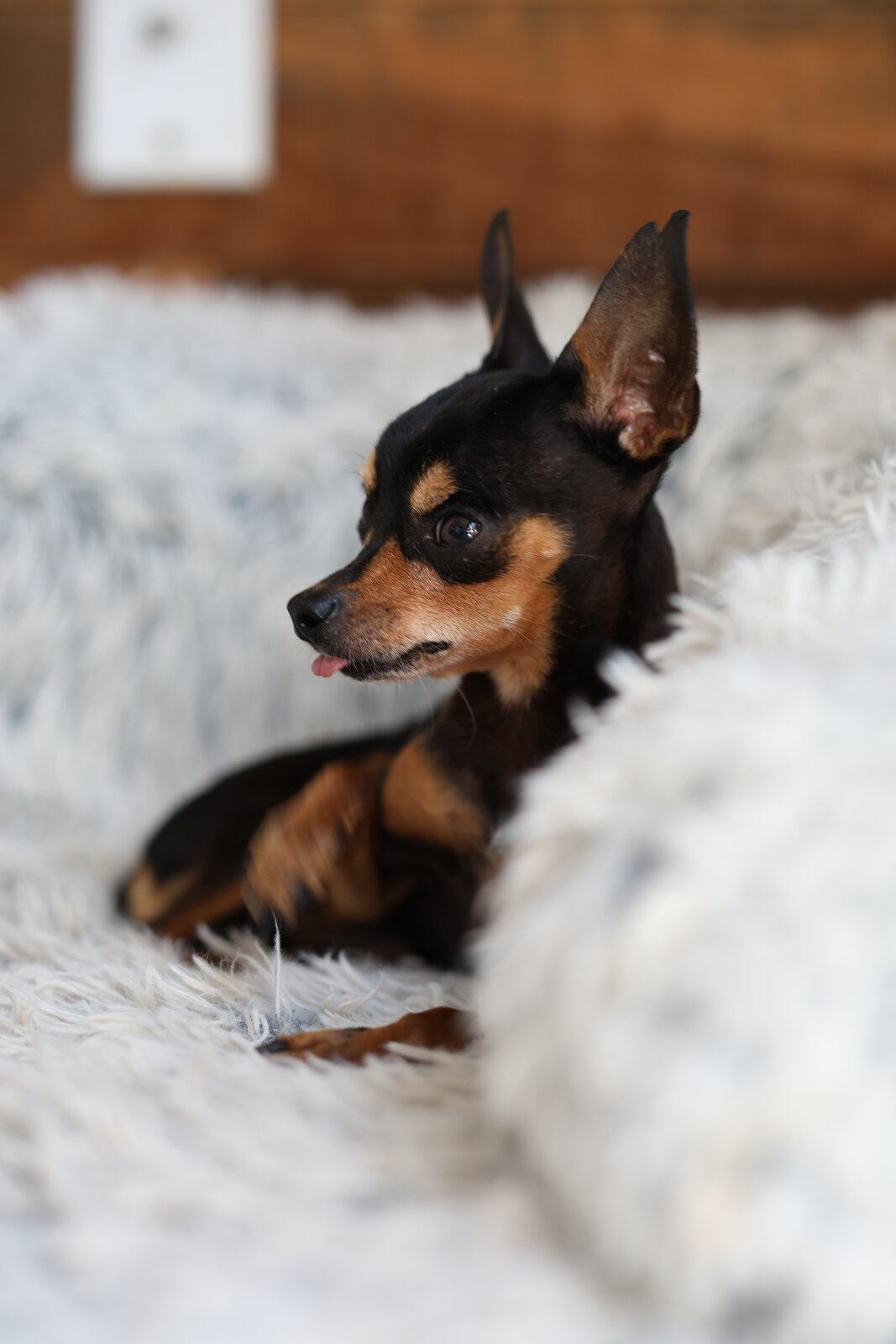
The head. A Chihuahua carries the famous "apple head" — a rounded skull with a short, often slightly upturned muzzle and prominent round eyes. The Russian Toy has a lighter, more refined head with a lean, pointed muzzle and large almond-shaped eyes.
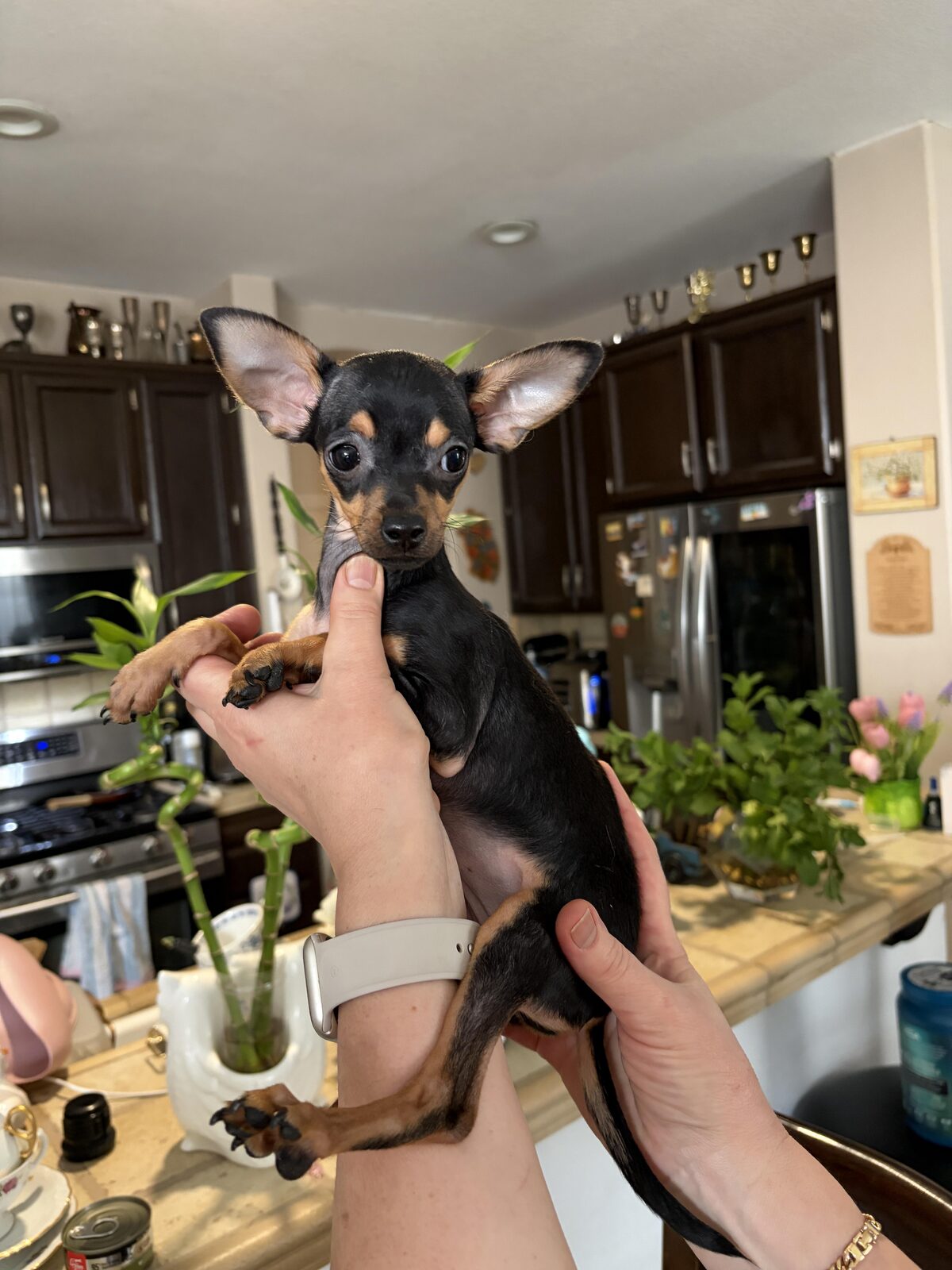
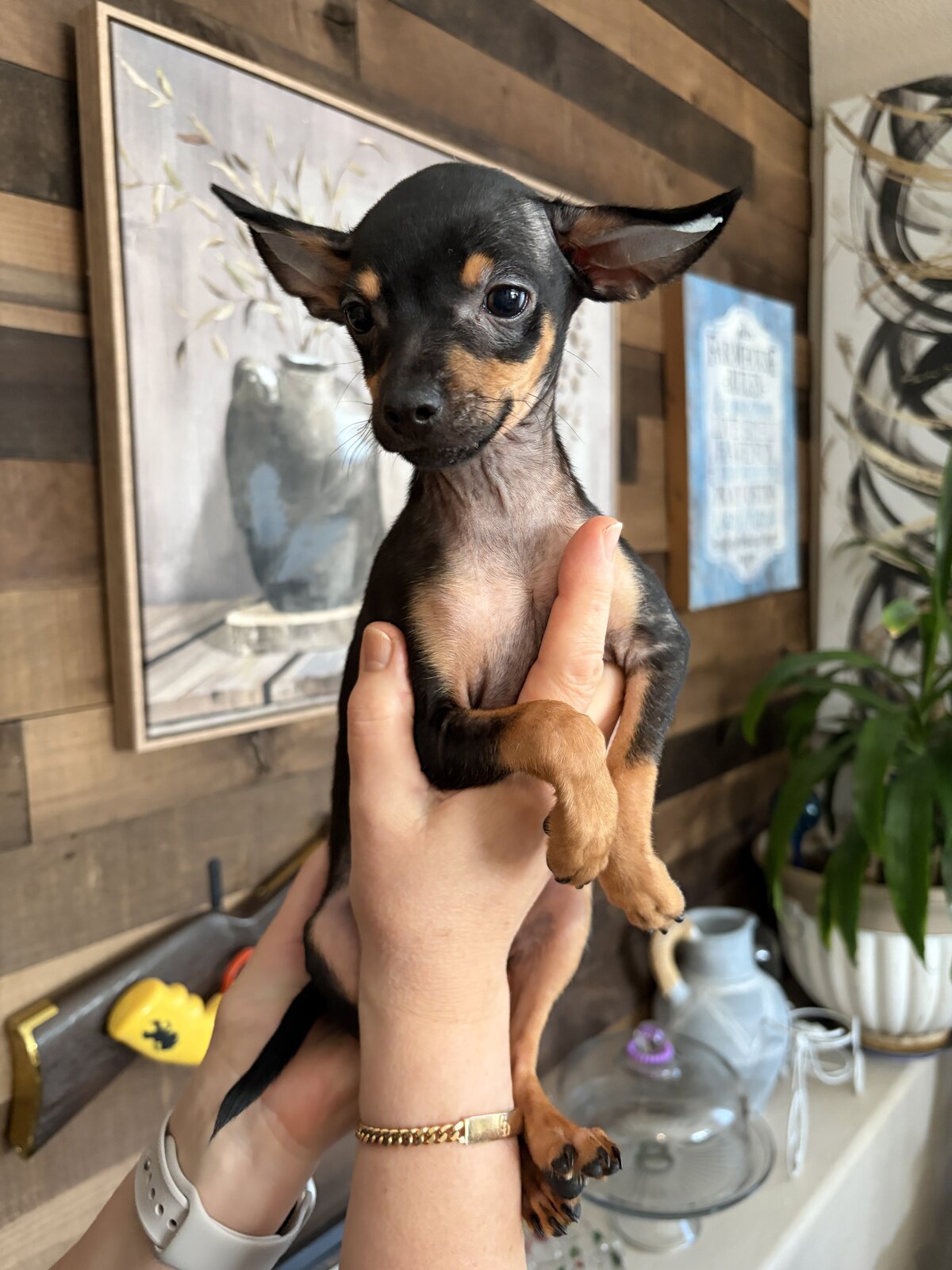
The ears. This is the giveaway. Russian Toy ears are huge for the size of the dog — thin, high-set, standing like radar dishes; in the long-haired variety they are decorated with spectacular fringes. Chihuahua ears are large too, but set wider and at more of an angle, and they never carry fringes like a long-haired Toy.
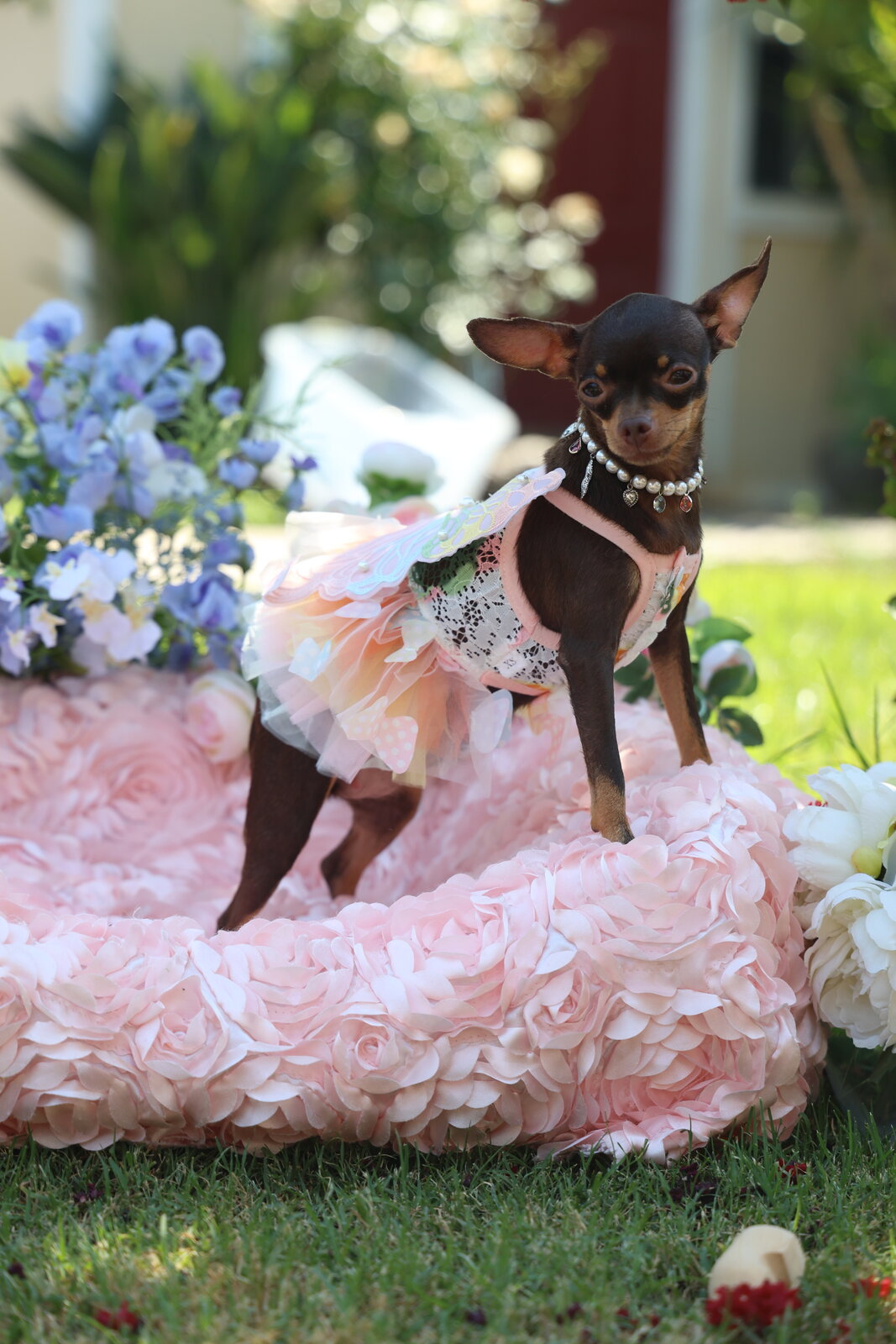
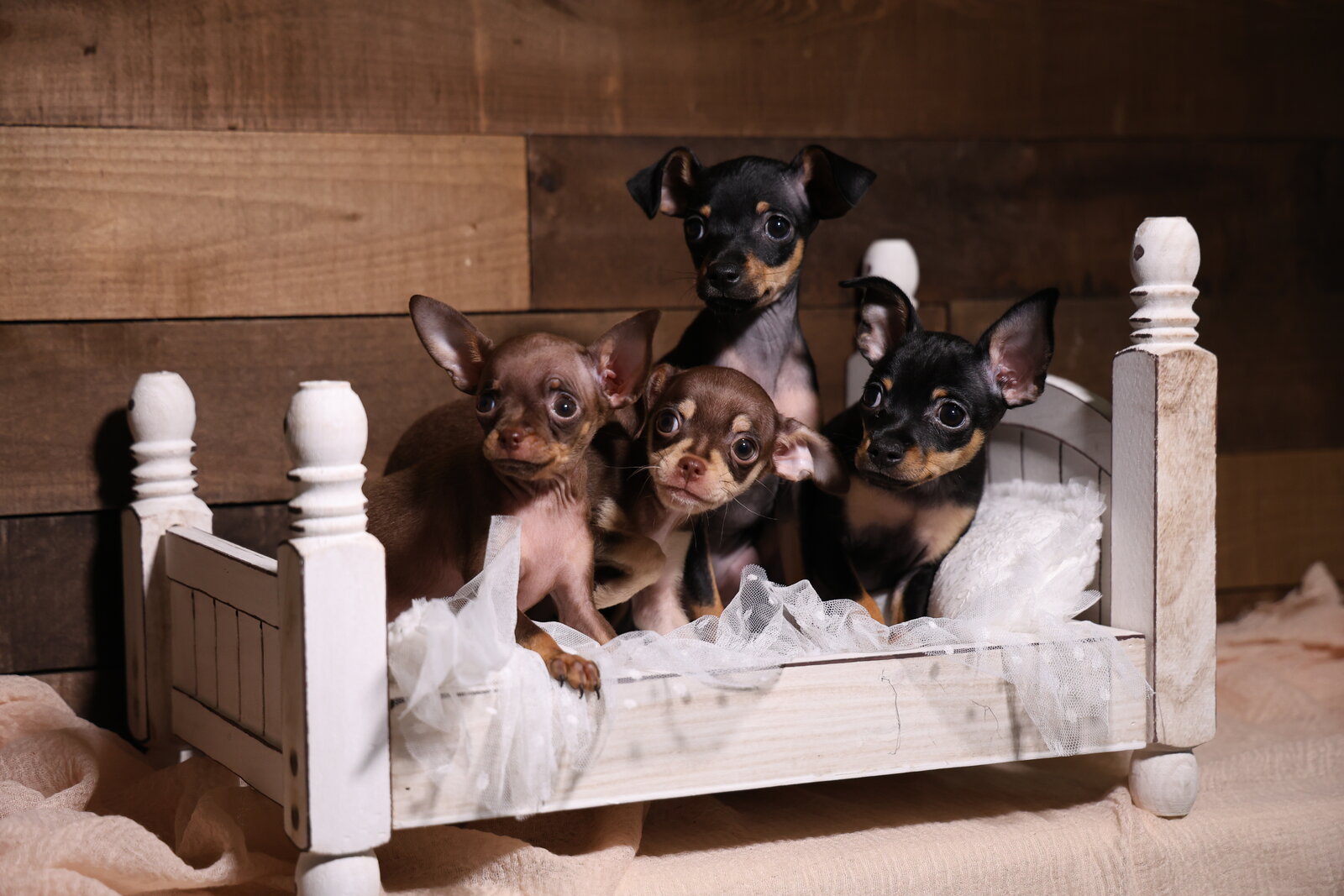
The coat and colors. Both breeds come smooth and long-coated, but the classic Russian Toy palette is dominated by tan-pointed colors — black and tan, brown and tan, blue and tan, lilac and tan — plus rich reds. Chihuahuas come in almost any color imaginable, including solid white, spotted and merle, which the Russian Toy standard does not have.
| Trait | Russian Toy | Chihuahua |
|---|---|---|
| Origin | Russia (aristocratic salons) | Mexico |
| Weight | 4–6 lbs | 3–6 lbs |
| Build | Square, long-legged, deer-like | Compact, rounder |
| Head | Lean, refined muzzle | Domed "apple" skull, short muzzle |
| Eyes | Large, almond-shaped | Round, prominent |
| Ears | Very large, thin, high-set (fringed in long coat) | Large, wider-set, never fringed |
| Colors | Tan-pointed (black/brown/blue/lilac & tan), reds | Almost any color incl. white, spotted, merle |
| AKC recognition | 2022 (Miscellaneous) | 1904 |
| Temperament | Lively yet gentle, people-oriented | Bold, opinionated, often one-person |
Two Different Personalities
Temperament is where the breeds truly part ways. The Chihuahua is famously bold, opinionated and often a one-person dog with a touch of drama. The Russian Toy is a terrier at heart: lively, athletic and playful, yet remarkably gentle and people-oriented. Our dogs want to be with their family every minute — they read your mood, follow you from room to room, and get along beautifully with children and other pets when raised properly.
Neither breed is "better" — but they are different. If you are choosing between the two, meet a Russian Toy in person. In our experience, that meeting usually decides everything.